
Government and legislation
Government legislation and implementation advisory
Trace legislation through statutory functions and organisational capabilities so policy, technology and investment decisions remain connected to the mandate.
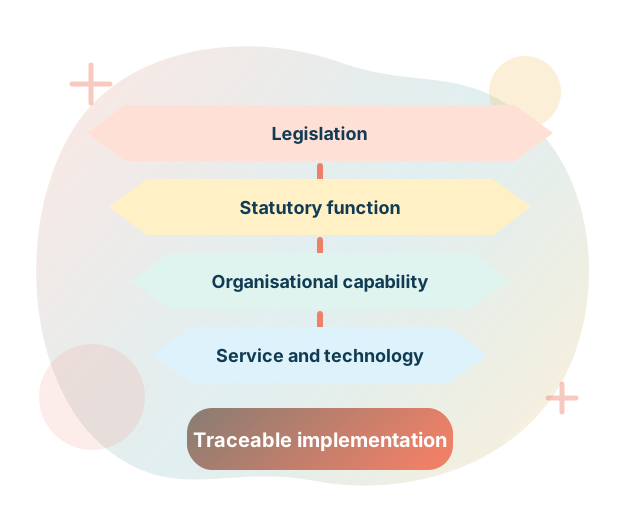
Legislation says what an organisation must or may do. It does not design the service.
An agency still needs to work out which functions it must perform, which capabilities make those functions possible and where people, information, controls and technology fit.
We help create that line from mandate to delivery without treating legislation as a technology requirements document or providing legal interpretation.
A four-layer method
- Legislation: identify the instruments that define or materially support the agreed scope.
- Statutory functions: describe the responsibilities and duties the organisation must perform.
- Organisational functions: show how those responsibilities are carried out in practice.
- Capabilities: identify what the organisation must be able to do consistently and lawfully.
As a simple illustration, a statutory duty to decide eligibility may depend on capabilities for receiving an application, confirming identity, applying approved decision rules, recording reasons, notifying the person and handling review. Technology enables some of that work; it does not define the statutory purpose.
Work delivered for a New Zealand government organisation
Hot Desk produced a Legislative Capability Alignment Framework and executive presentation for a government organisation. The work mapped legislation to statutory functions, organisational functions and required capabilities. It also connected capability groups to organisational structure, expanded Digital and Technology as one enabling area, and set out governance, ownership, assurance and review considerations.
We can describe the framework and the work delivered, but the material we retain does not tell us what the organisation adopted or implemented later. We therefore make no claim about those later outcomes and keep the organisation anonymous.
What an engagement can produce
An engagement might produce a capability model, function maps, traceability tables, a detailed view of one priority capability, governance guidance or material for an executive decision. We check the mappings with the people responsible for the business, policy, governance and technology involved.
Discuss a legislative or capability question, or explore related business-process, regulatory compliance and security consultancy.
Start a conversation
Bring us the challenge, not a finished specification.
We will help clarify the current state, the decisions that matter and a practical next step.